Alcohol addiction can affect a person’s health, relationships, work, finances, and everyday life. Many people want to stop drinking but find it difficult to manage cravings, withdrawal symptoms, stress, and the situations that trigger drinking.
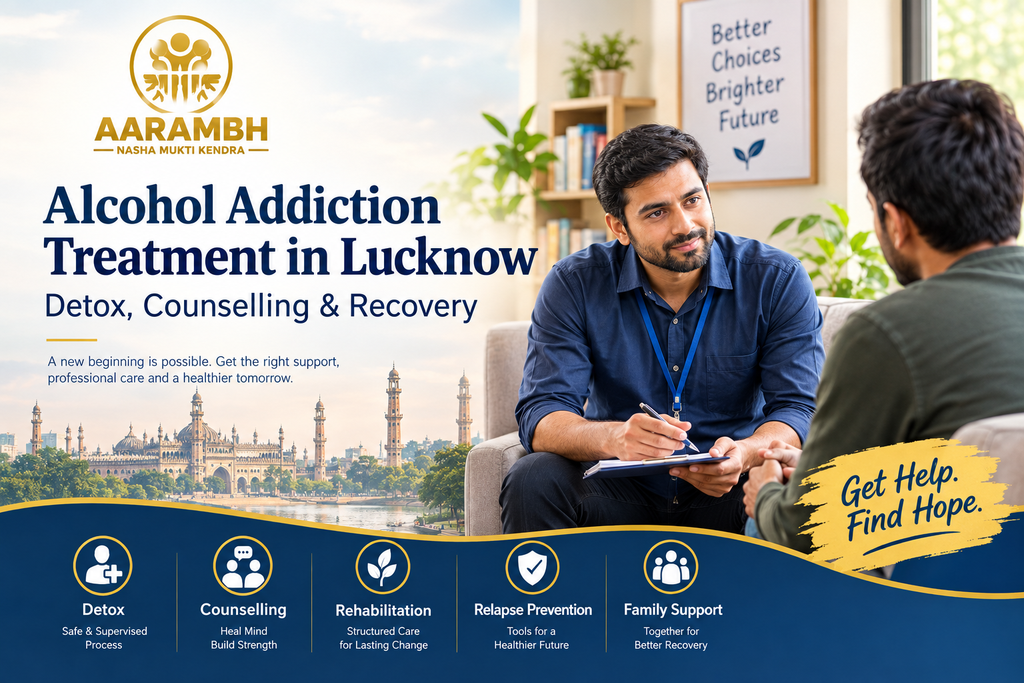
Professional alcohol addiction treatment in Lucknow can provide structured support through assessment, detoxification when required, counselling, rehabilitation, relapse prevention, and aftercare. The right treatment approach depends on the person’s physical health, drinking pattern, withdrawal risk, and recovery needs.
If you or a family member is struggling with alcohol dependence, seeking professional help can be an important step toward recovery.
What Is Alcohol Addiction?
Alcohol addiction is a condition in which a person continues to drink despite experiencing problems related to alcohol use. A person may find it difficult to control how much or how often they drink.
Alcohol dependence can involve both physical and psychological factors. Some people develop strong cravings, while others may experience withdrawal symptoms when they suddenly stop drinking.
When Does Alcohol Use Become a Problem?
Alcohol use may require professional attention when a person:
- Finds it difficult to control drinking
- Frequently thinks about alcohol
- Needs more alcohol to experience the same effect
- Drinks despite family, work, or financial problems
- Has tried to stop drinking but starts again
- Experiences cravings
- Develops withdrawal symptoms after reducing or stopping alcohol
- Spends significant time obtaining, drinking, or recovering from alcohol
These signs can vary from person to person. A professional assessment can help determine the appropriate level of support.
What Does Alcohol Addiction Treatment in Lucknow Include?
Alcohol addiction treatment in Lucknow can involve several stages. Treatment is not limited to stopping alcohol use. It also focuses on understanding the reasons behind drinking and developing healthier ways to manage cravings, emotions, stress, and daily situations.
A structured treatment programme may include:
- Initial assessment
- Alcohol detoxification when required
- Medical or professional monitoring
- Individual counselling
- Behavioural therapy
- Family counselling
- Rehabilitation
- Relapse-prevention planning
- Aftercare and recovery support
Each person may need a different treatment plan. The duration and type of support can depend on the severity of alcohol dependence and the person’s overall condition.
What Happens During Alcohol Detox Treatment in Lucknow?
Alcohol detox is often the first stage of treatment for people who have developed physical dependence on alcohol.
What Is Alcohol Detox?
Alcohol detoxification is the process of managing the physical and psychological effects that can occur after a person stops or significantly reduces alcohol use.
Withdrawal can range from mild to severe. For some people, stopping alcohol suddenly can be medically risky. This is why people with significant alcohol dependence should discuss stopping alcohol with a qualified healthcare professional rather than attempting a difficult withdrawal process alone.
What Are Common Alcohol Withdrawal Symptoms?
Possible withdrawal symptoms include:
- Anxiety
- Restlessness
- Sweating
- Shaking or tremors
- Irritability
- Nausea
- Headache
- Sleep problems
- Increased heart rate
- Strong cravings
Severe withdrawal can require urgent medical attention. Symptoms such as confusion, hallucinations, seizures, or severe agitation need immediate medical evaluation.
The detox process should therefore be planned according to the person’s condition and withdrawal risk.
Is Alcohol Detox Enough to Recover From Addiction?
No. Detox and long-term addiction recovery are different stages.
Detox mainly focuses on managing withdrawal after alcohol use is stopped or reduced. It does not automatically address the emotional, behavioural, psychological, and social factors that may contribute to continued drinking.
After detox, counselling, rehabilitation, behavioural support, relapse prevention, and aftercare can help a person work toward long-term recovery.
This is why a complete alcohol addiction treatment centre generally focuses on more than detox alone.
How Does Counselling Help With Alcohol Addiction?
Counselling is an important part of alcohol addiction recovery. It can help a person understand drinking patterns, identify triggers, develop coping skills, and work on behavioural changes.
Individual Counselling
Individual counselling gives a person an opportunity to discuss personal challenges in a private setting.
Counselling may address:
- Drinking triggers
- Stress
- Emotional difficulties
- Cravings
- Family problems
- Negative thought patterns
- Difficult social situations
- Relapse risks
The goal is to help the person understand their behaviour and develop healthier ways to respond to difficult situations.
Behavioural Therapy
Behavioural approaches can help people identify patterns that contribute to alcohol use.
For example, a person may drink whenever they experience work stress. During treatment, they can learn to identify this trigger and develop alternative coping strategies.
Family Counselling
Alcohol addiction can affect the entire family. Family members may experience stress, financial problems, communication difficulties, and emotional exhaustion.
Family counselling can help improve communication and help family members understand how they can support recovery without encouraging unhealthy drinking patterns.
Group Support
Group-based recovery support can help people interact with others who are facing similar challenges. Sharing experiences in a structured environment may help reduce isolation and encourage positive recovery habits.
How Does an Alcohol Rehabilitation Centre in Lucknow Support Recovery?
An alcohol rehabilitation centre in Lucknow can provide a structured environment where people can focus on recovery away from some of the situations that encourage drinking.
A rehabilitation programme may include:
- Regular counselling
- Recovery education
- Structured daily routines
- Behavioural support
- Healthy lifestyle activities
- Family involvement
- Relapse-prevention planning
- Progress monitoring
- Aftercare guidance
The purpose of rehabilitation is not simply to keep someone away from alcohol. It is to help the person develop practical skills for managing life without depending on alcohol.
How Long Does Alcohol Addiction Treatment Take?
There is no single treatment duration that works for everyone.
The length of treatment can depend on:
- Severity of alcohol dependence
- Physical health
- Withdrawal risk
- Previous treatment history
- Previous relapses
- Response to counselling
- Family and social support
- Individual recovery needs
Some people may need a shorter structured programme, while others may benefit from longer-term rehabilitation and aftercare.
The important point is to focus on the person’s recovery needs instead of choosing a treatment duration only because it is shorter or longer.
What Is the Alcohol Addiction Recovery Process Like?
A structured recovery journey can generally follow several stages:
Assessment → Detoxification → Counselling → Rehabilitation → Relapse Prevention → Aftercare
Step 1: Assessment
Professionals understand the person’s drinking history, health, withdrawal risk, previous treatment, and recovery needs.
Step 2: Detox
When required, alcohol withdrawal is managed with appropriate professional supervision.
Step 3: Counselling
The person works on emotional, behavioural, and psychological factors related to alcohol use.
Step 4: Rehabilitation
The person follows a structured recovery programme and develops healthier daily habits.
Step 5: Relapse Prevention
The person learns how to identify triggers, manage cravings, and respond to difficult situations.
Step 6: Aftercare
Recovery support continues after the main treatment programme to help maintain progress and deal with future challenges.
How Does Relapse Prevention Help With Alcohol Recovery?
Recovery does not end simply because a person has stopped drinking.
Stress, social pressure, emotional problems, old routines, and exposure to alcohol can create challenges after treatment.
Relapse-prevention planning can help a person identify:
- Personal drinking triggers
- High-risk situations
- Early warning signs
- Healthy coping strategies
- People who can provide support
- Steps to take when cravings become difficult
Having a plan before a difficult situation occurs can make it easier to respond in a healthy way.
How Can Families Support Someone With Alcohol Addiction?
Family support can make an important difference during recovery.
Families can help by:
Encouraging Professional Help
Instead of relying only on promises to stop drinking, encourage the person to discuss the problem with qualified professionals.
Communicating Without Constant Blame
Repeated criticism can sometimes increase conflict. Calm and supportive communication can create a better environment for recovery.
Supporting the Treatment Plan
Family members can participate in counselling or other activities when recommended as part of the treatment programme.
Avoiding Enabling Behaviour
Supporting someone does not mean protecting them from every consequence of alcohol use. Families can maintain healthy boundaries while still offering emotional support.
Watching for Warning Signs
Changes in behaviour, increased cravings, returning to old drinking patterns, or withdrawal from recovery activities may indicate that additional support is needed.
What Should You Look for in an Alcohol De Addiction Centre in Lucknow?
Choosing an appropriate Alcohol De Addiction Centre in Lucknow is an important decision. Families should look beyond advertisements and ask practical questions about the treatment programme.
Consider the following:
- Is there a proper assessment process?
- Is professional support available for detox when required?
- Does the centre provide counselling?
- Is the treatment plan personalised?
- Is family involvement available?
- Does the programme address relapse prevention?
- Is aftercare support provided?
- Are treatment methods explained clearly?
- Can the centre explain who provides different parts of the treatment?
A good treatment decision should be based on the person’s needs, safety, professional guidance, and the services actually provided by the centre.
Why Choose Aarambh Nasha Mukti Kendra Lucknow?
Aarambh Nasha Mukti Kendra Lucknow provides a recovery-focused environment for people seeking support for alcohol addiction.
The treatment approach can focus on understanding the individual’s needs and supporting recovery through appropriate counselling, rehabilitation, behavioural support, and relapse-prevention strategies.
For families searching for an alcohol addiction treatment centre in Lucknow, it is important to discuss the person’s condition and treatment requirements with the centre before making a decision.
Every recovery journey is different. The right approach should consider the person’s drinking history, health, withdrawal risk, family situation, and long-term recovery needs.
What Are the Benefits of Professional Alcohol Addiction Treatment?
Professional treatment can provide structured support that may be difficult to achieve when someone tries to manage addiction alone.
Potential areas of support include:
- Professional assessment
- Structured recovery planning
- Withdrawal management when appropriate
- Individual counselling
- Behavioural support
- Family involvement
- Relapse-prevention planning
- Continued recovery support
Treatment should always be based on individual needs rather than a one-size-fits-all approach.
Key Takeaways
- Alcohol addiction can affect physical health, emotional well-being, family life, and daily functioning.
- Professional assessment can help identify appropriate treatment needs.
- Alcohol detox focuses on managing withdrawal and may require professional supervision.
- Detox alone does not necessarily address the causes and patterns associated with addiction.
- Counselling can help people understand triggers and develop healthier coping strategies.
- Rehabilitation provides structured support for recovery.
- Relapse prevention can help people prepare for future challenges.
- Family involvement can provide additional support during recovery.
- Aftercare can help maintain recovery progress after the main treatment programme.
- People struggling with alcohol dependence should consider discussing their situation with qualified professionals.
Frequently Asked Questions About Alcohol Addiction Treatment in Lucknow
What is alcohol addiction treatment in Lucknow?
Alcohol addiction treatment in Lucknow is a structured recovery process that may include assessment, detoxification when required, counselling, rehabilitation, behavioural support, relapse prevention, and aftercare. The treatment approach depends on the person’s health, alcohol use pattern, withdrawal risk, and individual recovery needs.
What happens during alcohol detox treatment?
During alcohol detox, professionals focus on managing withdrawal after a person stops or significantly reduces alcohol use. Withdrawal symptoms can vary from mild to severe. People with significant alcohol dependence should seek professional guidance because severe withdrawal can require urgent medical care.
How long does alcohol rehabilitation take?
The duration of alcohol rehabilitation varies from person to person. It can depend on alcohol dependence severity, health, withdrawal risk, previous treatment, relapse history, response to counselling, and recovery needs. A professional assessment can help determine an appropriate treatment plan.
Is detox enough to recover from alcohol addiction?
Detox is generally only one part of the recovery process. It focuses mainly on withdrawal management. Long-term recovery may also require counselling, behavioural support, rehabilitation, relapse-prevention planning, and aftercare.
Can counselling help with alcohol addiction?
Counselling can help people understand their drinking patterns, identify triggers, manage cravings, develop coping skills, and work on behavioural and emotional challenges associated with alcohol use.
When should someone seek alcohol addiction treatment?
Professional help should be considered when drinking becomes difficult to control, causes problems in daily life or relationships, creates strong cravings, or leads to withdrawal symptoms when alcohol use is reduced or stopped.
Can families participate in alcohol addiction treatment?
Yes, family involvement may be included when appropriate. Family counselling can help improve communication, establish healthy boundaries, understand addiction, and support the person’s recovery process.
What should I look for in an alcohol rehabilitation centre in Lucknow?
Look for a centre that provides proper assessment, appropriate professional support, counselling, structured rehabilitation, relapse-prevention planning, family support, and aftercare. Ask questions about the treatment process and the professionals involved before making a decision.
Can alcohol addiction be treated?
Alcohol addiction can be managed through appropriate treatment and long-term recovery support. Treatment needs vary between individuals, and recovery can involve several stages, including withdrawal management, counselling, rehabilitation, relapse prevention, and continuing support.